 “It’s easier to fool people than it is to convince them that they’ve been fooled.” ~Mark Twain
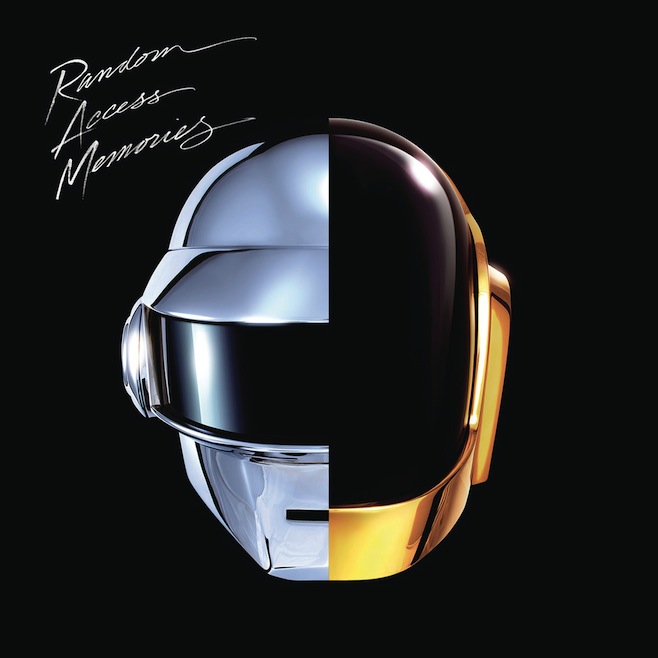
When it came time to do award stuff last year, the discussion for the winner of Not Best Album went slow at first. It was harder to pick out the candidates as the year had been so positive and it felt so sour to rake through the fewer unpleasant moments we had. With the exception of Lana Del Ray, nothing stood out as being particularly odious until Cokemachineglow ran their feature on the best albums of 2012, and Julia Holter’s existence was forced back into my mind. So I, calmly as I could, made my case for Ekstasis as being what we eventually claimed it was, and it was solved. I was so hopeful I would never have to think about such things again. How terrible it was to be wrong on that one, and how terrible it is to live in this world where Daft Punk talks to people.
That was the whole point, wasn’t it? They’re anonymous, they’re hidden, and they just make future music and we are meant only to enjoy it. You could track down interviews they gave at some point, but it never really felt like they were actually trying to get out in front of an album and explain. Maybe they never felt they had to until now. I can say this: without their words, this article doesn’t exist. It would have just passed by, being marked as “boring,” and dismissed entirely when it came time for award stuff, where we would slave over finding some other album to take a stand against. Instead, they talked, and now someone is going to have to kill people with music to have a shot at winning Not Best Album 2013.
Let’s get started. All quotes come from the Pitchfork cover story.
“Technology has made music accessible in a philosophically interesting way, which is great, but on the other hand, when everybody has the ability to make magic, it’s like there’s no more magic—if the audience can just do it themselves, why are they going to bother?”
Fuck.
I’ll leave the classist element alone for now, and start with how the record sounds first. That’s as fair as I feel like being. How it sounds is expensive. There’s an obsessive approach made to fine tuning every second of sound to be what they needed it to be, and they do appear to have success with building the exact design of their record. So that’s positive. The issues arise in three places: one is how insular the logic behind the songs is. A large part of what they do with their music is targeted at an issue that, frankly, doesn’t exist in the way they think it does. “Give life back to music.” “Doin’ it right.” “Lose yourself to dance.” They suggest a world in which music’s credibility has been hollowed out by the uneducated careerists. If this argument is to be entertained, and it is assumed that music’s credibility now lacks, it’s through muzak specifically.
I actually went through this particular train of thought with a friend, where they made the point that music is not in a position where it must be focused on most of the time. Music blends in with visual creative forms, and is regulated to a position where it merely eases the tone of the writing or cinematography. It sets the stage faster than a bad actor can hope to. This is, however, totally neglected by Random Access Memories. Daft Punk supposes the problem has originated entirely in music instead of being victimized by the evolving parasite of media. So the album is largely built on false pretenses.
The other issue with the sound is how by filtering whims through other people, session musicians and guests, there’s never really a point where it feels like the entity Daft Punk is behind the songs. It certainly has the brand, but not the personality that established the brand. I imagine this is born from insecurity. See here:
“We were never able to connect with using computers as musical instruments, We’ve always relied on hardware components—old drum machines, synthesizers—but it was more like a chaotic electrical lab with wires everywhere. We tried to make music with laptops in the mid 2000s, but it was really hard to create from within the computer without putting things into it. In a computer, everything is recallable all the time, but life is a succession of events that only happen once.”
I do understand the concept of self-consciousness in regards to how you approach the instruments you’ve learned. Shit, at least half of my last record was rooted in the place where “too much guitar and screaming” existed as a relevant idea. So in this one sense, I have a certain pity for Daft Punk even if I do derive a certain schadenfreude joy in the reversal of top electronic producers envying the physical musician. However, what they did with RAM was overcorrect. Very few songs on the record feel like being their own, and the ones that do suffer from being overly written lyrically as though they were distrusting of the sample manipulation approach to vocals that established the brand. I suspect that the experiences of being “popular” have lead them to feel like they had limited control of that brand, and so the overcorrection happens. Even so, it’s hard to sympathize…
“We like the idea of trying to be pioneers, but the problem with that is when you’re too much ahead, the connection doesn’t really happen at the time. At Coachella, we still may have been five years ahead of people, but the connection was happening at that moment. It was the most synched-up we ever felt.”
…as the dehumanizing appears to have been partly by design. Even with proof of their life-affirming abilities, they still felt superior and beyond the crowds that were there. The act of division from the public and from “celebrity” has had a side effect of creating elitism in their creative process. They were alienated by pushing things forward, which is kind of not a unique experience at all, and since they were so good at pushing things forward, so good that people only caught on after they’d moved on from recording albums, returning to the studio meant it was time to push elsewhere.
So here’s a question: if they were pushing forward for people, is there any use to moving another direction other than egotism? It is a form of egotism that leads to deviation from norms, or “pioneering,” but is this what happens when that egotism is accepted? The need to just keep pushing yourself away from people? This all seems to lead back into the core concepts of the fallacy behind the record: that they know better about what music needs. Only they can’t possibly know.
“And, in their own way, they’ve been bucking the status quo ever since. It’s why Daft Punk are more punk than almost any punk band of the last 20 years: They refuse to take the familiar path, all in the name of keeping themselves—and their audience—engaged.”
This doesn’t really have a lot to do with the record. I just wanted to put this quote next to this to show agaIn how shit the fork is, and because it’s time to return to the classist elements of all of this:
“In fact, they may have never met if Bangalter’s music-producer father (who wrote several 70s disco hits) and ballet-dancer mother didn’t transfer him into Paris’ prestigious Lycée Carnot high school, looking to give their son more of a challenge after he easily vaulted to the top of his class elsewhere. While both grew up with money—de Homem-Christo’s family ran an ad agency—their parents allowed them a sense of freedom, which was hardly a given among their buttoned-up classmates.”
There it is, as clear as day. Daft Punk can’t relate because Daft Punk has never been able to relate. They come from money and connections. Any of the value that has been attributed to Daft Punk is a result of the mystery of the brand. The truth is a more bitter taste than what’s in their sleek coke bottles, because that is the ugly side of the machine Daft Punk has always been aligned with. Their disco fantasy springs from the same sides of western luxury, with no exposure to the darkness of it. Their hardship is petty, and their art is now weightless. And this is why they see the need to bring life back to music, because the life breathed into it now is not so dependent on the elites, the ruling class, the money and privilege. It doesn’t feel the same, because it’s not the same.
“With this record, we had the luxury to do things that so many people cannot do, but it doesn’t mean that with luxury comes comfort.”
This is how they try to fight the change. This is how they “give life back to music.” Through money, elitist power and renown. The Brand Strikes Back. Alarmingly, there has been little fight back against this affront. The record sells, the press hails, and through misunderstood systems they have ratified the war against the amateur peasantry of music. It’s difficult to tell, however, who has been fooled between the lovers or the stewards of the Daft Punk brand. It’s a loss either way.
WINNER: “Random Access Memories” by Daft Punk
WHY: They have gotten people to vote against their own best interests. However since there’s no set day for this vote, they have created an infinite cycle of people voting against their own best interests. Random Access Memories is the sound the ouroboric system eating the world makes.

 Fermata over Whole Rest