Originally formed as a grindcore/D-beat band in the mid 80’s, Liverpool UK’s Carcass grew to be one of the most beloved and influential Death Metal bands. Their first album Reek of Putrefaction was a brief, roughly produced, and abrasive effort. Despite the bands dissatisfaction with how their debut turned out, it managed to catch the attention of the late DJ John Peel. Peel invited the band onto his show where they recorded an EP entitled ‘The John Peel Sessions’. The EP featured songs that would end up on the bands second effort ‘Symphonies of Sickness’. Symphonies marked a vast improvement over ‘Reek of Putrefaction’ in the production department, and marked a stylistic change towards a Death metal sound.
Carcass recruited British-Swedish guitarist Michael Amott(then of the recently defunct Carnage), to join Bill Steer as a second guitarist. The band then went into the studio and recorded ‘Necroticism – Descanting the Insalubrious’. The album featured a slightly more melodic edge, particularly in the leads department. Amott and Steer made an interesting team trading off different types of guitar soloing technique; Amott’s more melodic and influenced by the Swedish Death Metal scene, and Steer’s more atonal and decrepit sounding. The transition towards a more melodic sound continued on the bands magnum-opus ‘Heartwork’. ‘Heartwork’ featured a combination of crushing riffs with dual guitar harmonies, melodic solo’s, and Jeff Walkers savage shrieks. ‘Heartwork’ became a pioneering and extremely influential piece of work that continues to inspire bands working within the melodic death metal genre, to this day. Before the release of ‘Swansong’ Michael Amott made his exit, and went on to form Arch Enemy. Carcass went back to performing as a 3 piece. Taking influence from more traditional rock and roll, and combining it with the intensity of death metal, ‘Swansong’ -released in 1996- would become the bands final album before ‘Surgical Steel’.
It’s been 18 years since the band released an album of new material. When so much time has passed a band is put in a difficult position of deciding whether they will continue where they have left off, or to go back to their classic era and create a piece of work that taps into that nostalgia.
In 2006 Carcass reformed and toured extensively with most of the members from the Necroticism and Heartwork line up. Ken Owen was unable to participate however, due to a cerebral hemoraging injury sustained in 1999 which effected his ability to perform on drums adequately. Amott left before the recording of any new material to focus on Arch Enemy.
Daniel Wilding of British Death-grind group ‘Trigger the bloodshed’ was chosen to perform drums on the new record in Ken’s place. Ken Owen however contributed backing vocals to the album.
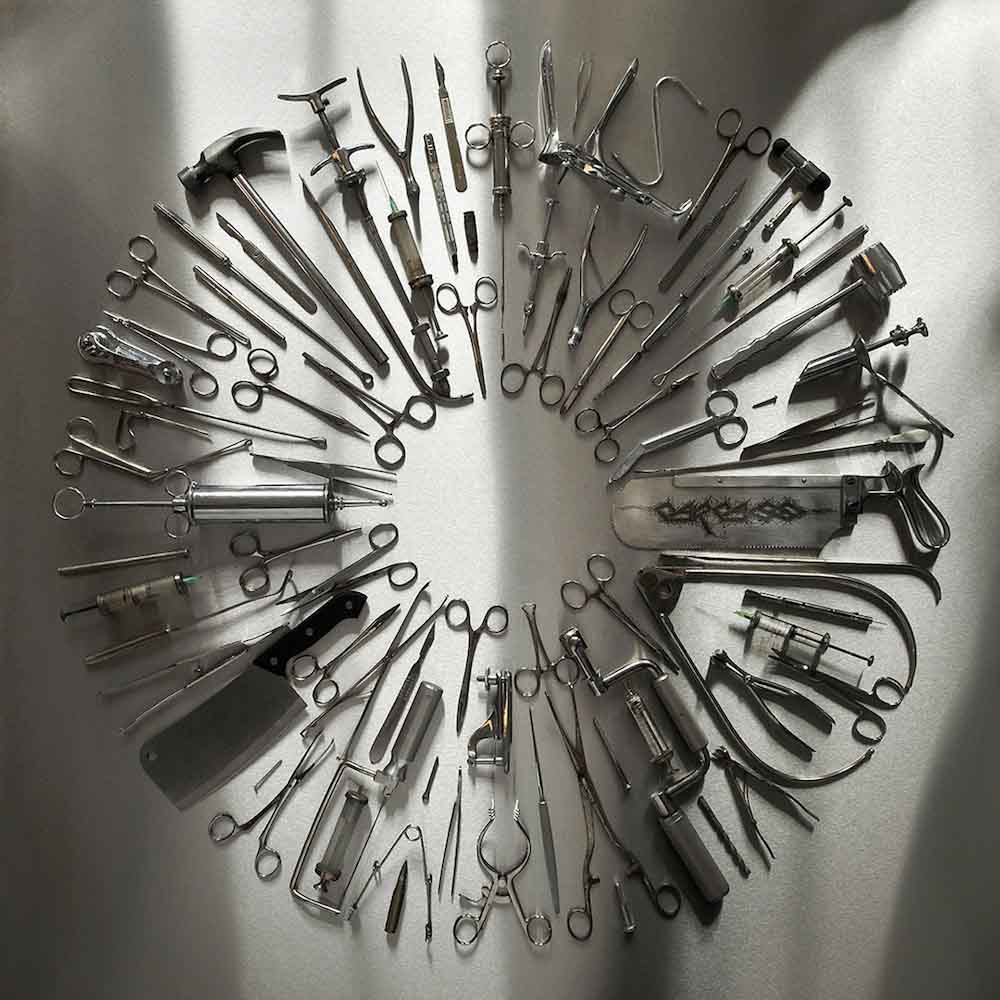
Surgical steel channels a middle ground between Necroticism and Heartwork. While the melodic leads and dual guitar harmonies from Heartwork are still present here, ‘Surgical steel’ has a more brutal edge. This could be entirely a production and guitar layering difference, but it is also apparent in the style of rhythm playing.
The track ‘1985’ starts the album off with anthemic dual harmonized guitars. But when ‘Thrashers Abatoir’ starts up around the 1:16 mark the album is truly in full swing, showing that Carcass still has what it takes to craft and perform pummeling extreme metal with conviction.
The next 3 tracks all follow a similar but effective formula with the guitars forming melodic passages that build up into pummeling and often percussive crescendo’s. ‘The Master Butcher’s Apron’ begins with the intensity of fast guitar work accented with a massive attack of rapid blast beat drumming, winding down into slower chugging riffs. The atonality never ceases to let up until the bridge section which combines more melodic riffing with the same savage drumming attack.
The latter half of the album is characterized by a shift in intensity. The back end of the album is more melodic than the front end, both in the rhythm and lead section. There is still some heavy material here, but it over all doesn’t thrash as much. Its still very good in the song writing department, so it’s by no means any indication that the album has lost steam.
In the guitar solo department, guitarist Bill Steer takes on the dissonant shreddy style of his previous work whilst channeling the stylistic differences that highlighted Michael Amotts contributions to the bands past material. The result provides a very similar solo trading dynamic that Amott and Steer had on Heartwork.
The albums production -provided by the producer of much of the bands past material, Colin Richardson- combined with the mixing and mastering prowess of renounced metal producer Andy Sneap, make the band sound very impressive and huge. The over all volume levels of the instruments, and their place in the mix makes the band sound their most dynamic and heavy without sounding overly compressed. The guitar’s don’t sound too much on the clean side and have sufficient bite. It’s modern metal production done right.
The fear of a reunited band producing a dud album, is an understandable and prominent enough feeling. Many of these albums can come out mediocre and feel borne out of necessity, with the band sounding tired and uninspired. But Carcass have released an album that simultaneously provides quality new material while giving the right amount of nods to their previous work. Fans of Heartwork and Necroticism will especially find a lot to like here. But those who felt that the band went off in the wrong direction after Symphonies of Sickness may not find the album to their liking.
 Fermata over Whole Rest