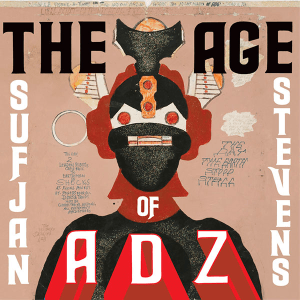
 Last month, I reviewed the recent EP from Sufjan Stevens, “All Delighted People”, which I enjoyed quite a bit. I also mentioned that I was a little down after hearing “I Walked” (apart of “The Age of Adz”) so coming into this album, I had a healthy skepticism for what I was going to end up hearing. After all, the guy has been making indie folk-pop for the past ten years, it’s always strange to see an artist take this much of a musical departure. If you asked me to describe the sound of “Adz”, it would result in a lot of confusion. The result of this album tells me that Sufjan got depressed over the past five years. He sounds more relatable than he has before and even though he throws out some of the most basic ideals of his albums “Michigan” and “Illinois”, minimizing the use of his banjo and throwing in drum machines and weird electronic blips, the core of his songwriting still stands.
The transition between the first two tracks is probably one of the biggest surprises of the year for me. I had expected Sufjan to sound totally obnoxious, clinging onto his new style with a firm, annoying grasp, but I was wrong. “Futile Devices” is a song that any fan of Sufjan Stevens will enjoy, with quirky yet melancholy lyrics and soft acoustic instrumentation. As soon as it ends, you are immediately thrust into the direction of the album with “Too Much”. The opening is reminiscent of Animal Collective, tearing up what once was “Sufjan” and replacing the sound completely.
Title track “Age of Adz” brings back his intricate and bombastic orchestrations while incorporating the album’s mildly electronic background and the reason I say “mildly” is because I believe calling this an electronic album is only a portion of what these songs come down to, though it is definitely there. Now, I expressed some disappointment in “I Walked” when I had first heard it, but in the context of the remainder of the album, I realized that it actually is an interesting song after being grouped with the others. Also, it now reminds me of a recent event that makes me kind of sad, so that might make the song automatically better.
“Vesuvius” which is probably one of my favorite songs on here has a bit of a call-out from Sufjan himself as he receives an answer: “Sufjan, follow the path. It leads to an article of imminent death. Sufjan, follow your heart. Follow the flame or fall on the floor.” This is him asking for advice for something, perhaps music, or maybe just his life. His vagueness throughout this song and the entire album keeps my previous statement of his depression fairly intact.
One of the final signs of his increased edginess appears in “I Want To Be Well” where Sufjan Stevens, a pretty open Christian, spouts off the line “I’m not fuckin’ around” repeatedly through the song. If most artists pulled this, it wouldn’t be that special, but in his case you can tell his thought process has really changed over the years and it has carried over into his music. This reminds me when I broke out of the Christian faith and I eventually realized it really wasn’t for me so I sort of understand this direction.
“Impossible Soul”, the song on “Adz” that is over 25 minutes in length is definitely a highlight. It goes through a five-part composition crammed with an awesome distorted guitar solo, a section with autotuned vocals, a chorus singing gleefully “it’s not so impossible”, as well as a return to his trusty banjo at the very end. This piece is most assuredly a spectacle.
Sufjan Stevens made a really smart decision by not caving into his typical deal because I’m not sure how much more of it in a row I could probably take, after receiving what which was considered “classic Surf Jan” on the “All Delighted People EP”. I should also mention that this is not simply the situation of an alternative artist adding drum machines to his music to sound different. It’s a full-blown mood change. You can totally tell this is Sufjan Stevens, but it is an extremely unfamiliar and dark side of him that hasn’t been seen all that often.
WINNER: “The Age of Adz” by Sufjan Stevens
WHY: Five years since “Illinois”, the guy makes a solid, thought-provoking LP that sticks out from this year’s releases as well as his own as he commentates on his own career with a darker tone.
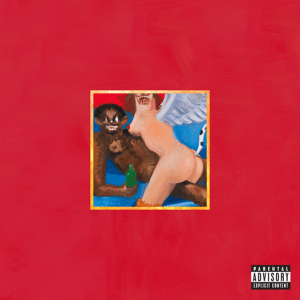 It’s safe to say that I’ve been waiting for this album for a while now, though it hasn’t been all that long since “808s and Heartbreak” was released. But before I go anywhere on expressing my thoughts on the album itself, let me give you the set up for Kanye as of late. September 2009: the VMAs, no explaining really needs to be done here. Since then, Kanye’s been keeping a relatively low profile, at least until Summer of 2010. There was a bunch of talk about how Kanye had been recording an album and whatever earlier this year, but he never took advantage of an outlet to tell people that. Then came “Power” out of nowhere: his redemption. This song made me realized that Kanye’s next release was going to mean hell of business. Lately, he’s been releasing one song every week for his

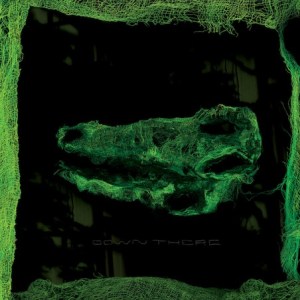 “Down There” is the first solo album from Animal Collective founding member Avey Tare (aka David Portner). Throughout the last decade, these guys made some wildly different music, from their hectic electro-coustic 2004 album “Sung Tongs” to the pop-driven 2009 album “Merriweather Post Pavillion”. With Avey Tare now by himself, I expected some of the craziness from “Sung Tongs” and “Strawberry Jam” to return but the end product turned out to be the exact opposite. “Down There” is perhaps the most subdued work I’ve heard from any Animal Collective project. Unfortunately, I really wish it wasn’t.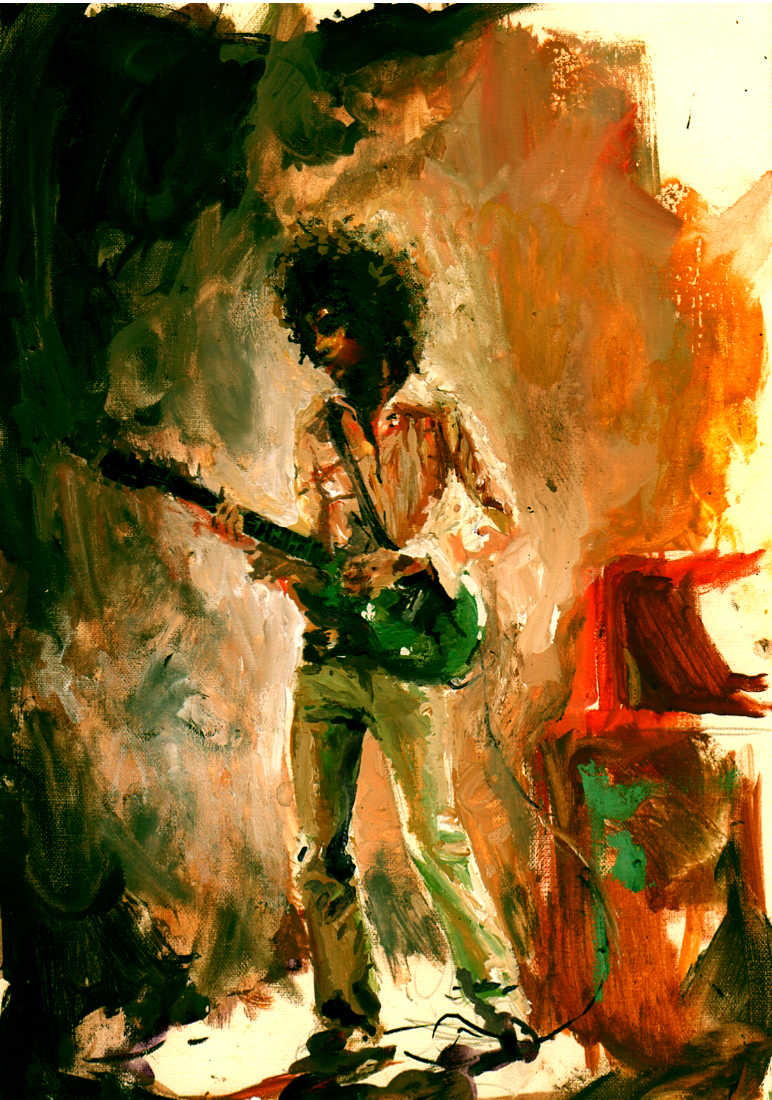

 Fermata over Whole Rest